Famous Canadian Artists List: Discover Iconic Creators

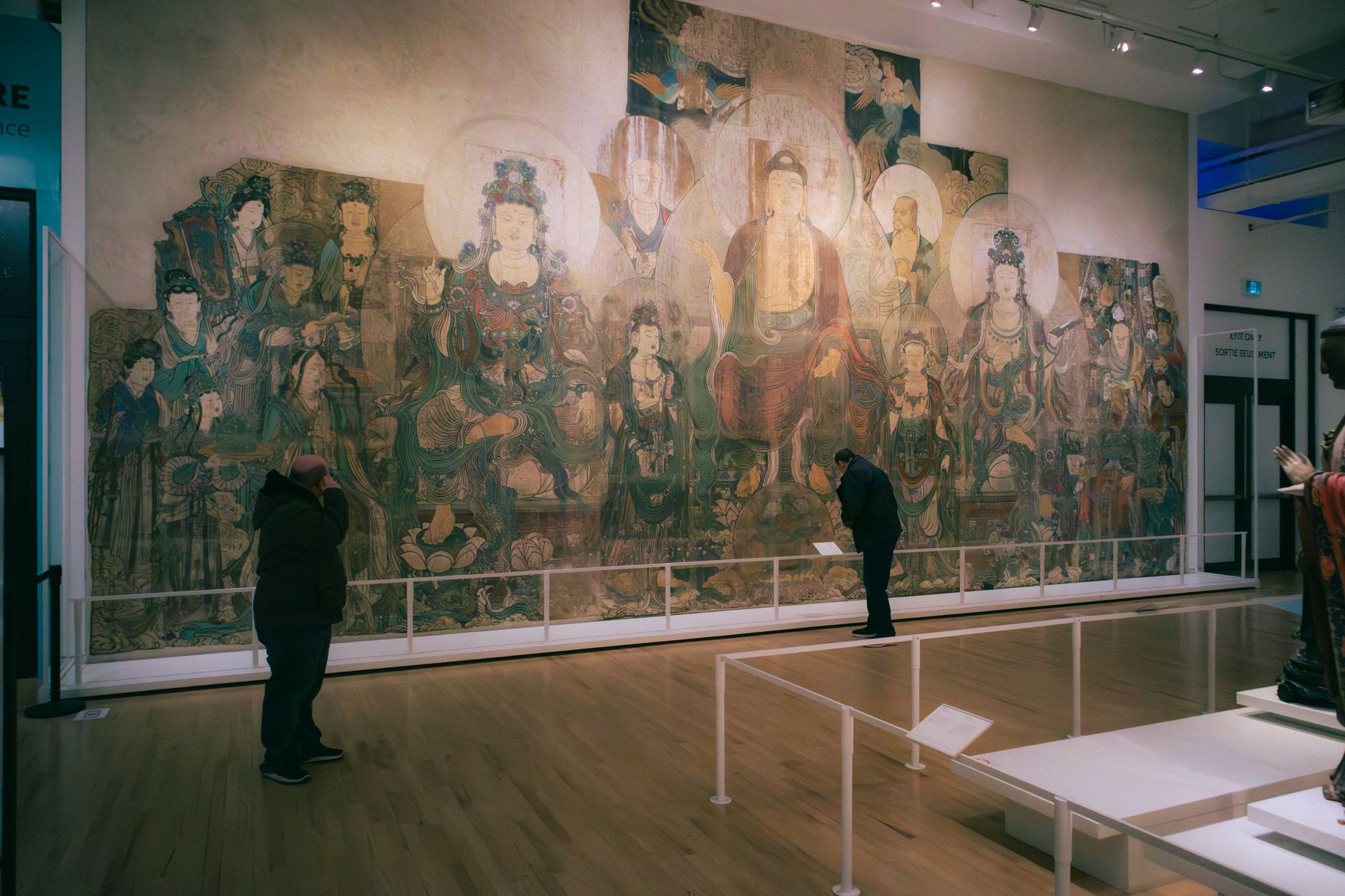
Visitors admire ancient Chinese Buddhist murals at a Toronto museum exhibit.Photo: Anurag Jamwal / Pexels

Famous Canadian Artists List: Discover Iconic Creators

Uncover the rich tapestry of Canadian artistic talent, from historical masters to contemporary visionaries who left an indelible mark.

Explore Their Legacies

Key Takeaways

  • ✓ Canada boasts a diverse artistic heritage, reflecting its vast landscapes and multicultural identity.
  • ✓ Indigenous artists have played a crucial role in shaping Canada's artistic narrative for millennia.
  • ✓ The Group of Seven revolutionized Canadian landscape painting in the early 20th century.
  • ✓ Contemporary Canadian artists continue to gain international recognition across various mediums.

How It Works

1
Browse Our Curated List

Dive into a comprehensive compilation of Canada's most influential and renowned artists. Each entry provides insights into their unique contributions.

2
Discover Their Masterpieces

Learn about the signature works and artistic movements associated with each featured artist. Understand the context and impact of their creations.

3
Explore Artistic Movements

Trace the evolution of Canadian art through different periods and styles, from traditional to avant-garde. See how artists influenced one another.

4
Deepen Your Appreciation

Gain a profound understanding of the cultural significance and global reach of Canadian art. Connect with the stories behind the brushstrokes and sculptures.

Pioneering Canadian Painters and Sculptors: A Legacy of Innovation

Visitors admire ancient Chinese Buddhist murals at a Toronto museum exhibit.Photo: Anurag Jamwal / Pexels
Canada's artistic landscape is as vast and varied as its geography, shaped by generations of pioneering painters and sculptors who dared to see the world differently. From the early colonial period to the vibrant contemporary scene, Canadian artists have consistently pushed boundaries, offering unique perspectives that resonate both locally and internationally. The foundation of Canadian art is deeply rooted in the exploration of identity, often intertwined with the majestic natural environment. Early artists frequently depicted the rugged beauty of the Canadian wilderness, using their canvases to interpret the raw power and serene solitude of the land. This tradition evolved, leading to distinct national art movements that sought to define a truly Canadian aesthetic, independent of European influences. One cannot discuss pioneering Canadian art without acknowledging the profound impact of Indigenous artists. For thousands of years before European settlement, First Nations, Inuit, and Métis peoples created intricate and meaningful art forms, including carvings, textiles, ceremonial objects, and storytelling through visual mediums. Artists like Norval Morrisseau, a Anishinaabe artist known as the 'Picasso of the North,' revolutionized Indigenous art by blending traditional Woodland School iconography with contemporary styles, bringing Indigenous narratives to mainstream galleries. His bold lines and vibrant colours tell stories of spiritual journeys and cultural heritage, bridging ancient traditions with modern expression. Similarly, Daphne Odjig, another foundational member of the Professional Native Indian Artists Inc. (the 'Indian Group of Seven'), combined Woodland style with Cubism and Surrealism, creating powerful works that addressed social justice and Indigenous rights. Their work, alongside countless others, forms an irreplaceable part of Canada's artistic heritage, challenging colonial narratives and asserting cultural sovereignty through art. Their contributions laid the groundwork for future generations of Indigenous artists to reclaim and innovate within their rich artistic traditions, ensuring that the visual language of Indigenous peoples continues to thrive and inform the broader Canadian art scene. Understanding these foundational artists is crucial to appreciating the full spectrum of Canadian artistic achievement and its ongoing evolution. Discover more about indigenous art forms and their profound impact on Canadian culture.

The Group of Seven and Beyond: Shaping Canada's Artistic Identity
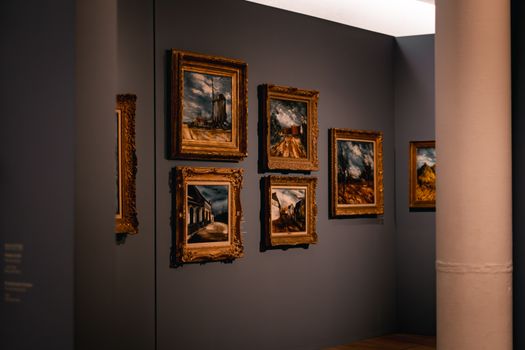
Elegant art gallery with framed paintings on a dimly lit wall, showcasing artistic works.Photo: Josue Canceco / Pexels
The early 20th century marked a pivotal moment in Canadian art history with the emergence of the Group of Seven. Comprised of artists like Lawren Harris, J.E.H. MacDonald, Arthur Lismer, Frederick Varley, Frank Johnston, Franklin Carmichael, and A.Y. Jackson, this collective aimed to forge a distinctly Canadian artistic identity by focusing on the country's vast and untamed landscapes. Rejecting the European-influenced academic styles prevalent at the time, they ventured into remote areas, from the Algoma wilderness to the Arctic, to capture the raw, spiritual essence of the Canadian terrain. Their bold brushstrokes, vibrant colours, and simplified forms revolutionized landscape painting, establishing a visual language that became synonymous with Canadian nationhood. Lawren Harris’s stark, almost abstract interpretations of Arctic icebergs and Lake Superior scenes, for instance, are iconic representations of this movement’s philosophical and aesthetic goals. Following the Group of Seven, other artists and movements continued to expand and challenge the definition of Canadian art. Emily Carr, though not officially a member, shared their passion for the Canadian landscape and, crucially, for Indigenous cultures of the Pacific Northwest. Her powerful, expressionistic paintings of totem poles, dense forests, and Indigenous villages offered a unique perspective, capturing the spiritual energy of both the land and its original inhabitants. Carr’s work stands as a testament to her deep respect for nature and Indigenous traditions, making her one of Canada's most celebrated and influential artists. Later in the 20th century, artists like Jean Paul Riopelle, a prominent figure in the Automatiste movement, brought Canadian art into the international abstract expressionist arena. His large-scale, dynamic canvases, often characterized by thick impasto and energetic gestures, garnered global acclaim and demonstrated Canada's capacity for avant-garde innovation. These artists, building on the legacy of their predecessors, ensured that Canadian art remained dynamic, diverse, and relevant on the world stage, continually redefining what it means to be a Canadian artist.

Contemporary Canadian Artists: Diverse Voices and Global Impact
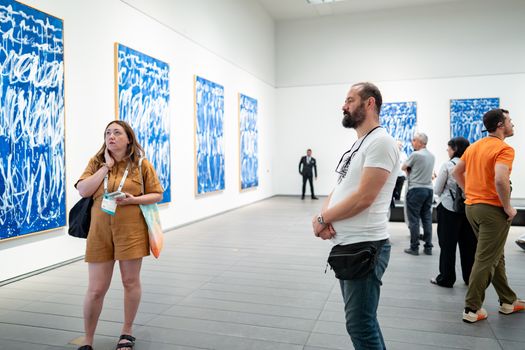
Visitors in an art gallery engaging with blue abstract artworks. Captured indoors with contemporary art, diverse visitors enhancing the scene.Photo: This And No Internet 25 / Pexels
The contemporary Canadian art scene is a vibrant tapestry of diverse voices, mediums, and perspectives, reflecting the country's multicultural fabric and its evolving place in the globalized world. Today’s artists continue to build upon the rich traditions established by their predecessors while fearlessly exploring new territories, from digital art and installation to performance and conceptual art. They engage with pressing social, political, and environmental issues, offering critical commentary and fostering dialogue through their creative expressions. This era is marked by an increased emphasis on individual narratives and a broadening of what constitutes 'Canadian art,' moving beyond purely landscape-centric themes to embrace urban experiences, identity politics, and global interconnectedness. One prominent figure in contemporary Canadian art is Jeff Wall, known for his large-scale, meticulously staged photographs that often resemble cinematic scenes. His 'cinematographic transparencies' explore themes of everyday life, social alienation, and art history, blurring the lines between photography, painting, and film. Wall's work has earned him international recognition and has significantly influenced contemporary photography. Another artist making significant waves is Shary Boyle, whose multidisciplinary practice spans ceramics, sculpture, drawing, and performance. Her fantastical and often unsettling works delve into themes of gender, folklore, and the subconscious, creating rich, narrative worlds that invite viewers to explore complex emotional landscapes. Boyle’s intricate ceramic figures and evocative installations are both visually stunning and intellectually stimulating, demonstrating a mastery of craft combined with profound conceptual depth. Furthermore, artists like Kent Monkman, a Cree artist, use painting, film, and performance to challenge colonial narratives and explore themes of Indigenous identity, sexuality, and reconciliation. His alter ego, Miss Chief Eagle Testickle, often appears in his works, humorously and incisively re-imagining historical events from an Indigenous perspective. Monkman’s work is vital for its powerful social commentary and its role in sparking important conversations about Canada's past and present. The contributions of these and many other contemporary artists highlight the dynamic and ever-evolving nature of Canadian art, demonstrating its capacity to engage with complex global issues while maintaining a distinctive national character. Their work ensures that the famous Canadian artists list continues to grow and diversify, reflecting the rich complexity of the nation. Learn more about modern art movements and their influence.

Tips for Exploring Canadian Art & Avoiding Common Misconceptions

Exploring the world of Canadian art can be an incredibly rewarding journey, offering insights into the nation's history, culture, and diverse perspectives. To make the most of your exploration, consider these helpful tips and be mindful of common misconceptions: **Tips for Exploring Canadian Art:** * **Visit Local Galleries and Museums:** Start with major institutions like the National Gallery of Canada in Ottawa, the Art Gallery of Ontario (AGO), or the Vancouver Art Gallery. Don't forget smaller regional galleries, which often showcase local talent and unique historical collections. * **Attend Art Fairs and Studio Tours:** These events provide opportunities to discover emerging artists, purchase art directly, and interact with creators. Many cities host annual art walks and open studio events. * **Read Art History Books and Catalogues:** Delve into well-researched publications that provide context and deeper analysis of artists and movements. Exhibition catalogues are particularly valuable for understanding specific bodies of work. * **Explore Online Resources:** Websites of galleries, artist collectives, and art history platforms offer extensive digital collections, artist biographies, and educational content. * **Focus on Specific Movements or Regions:** If the sheer volume feels overwhelming, pick a specific area of interest – perhaps Indigenous art, Quebec modernism, or contemporary photography – and build your knowledge from there. **Common Misconceptions to Avoid:** * **Myth: Canadian art is only about landscapes.** While landscape painting is a significant part of Canada's artistic heritage, it is far from its only focus. Contemporary Canadian art spans every genre imaginable, from abstract expressionism and pop art to performance art and digital installations. Limiting your view to landscapes means missing a vast and diverse artistic output. * **Myth: Canadian art is derivative of European or American art.** While art movements are often global, Canadian artists have consistently forged unique paths and offered distinct perspectives. The Group of Seven, for example, developed a style specifically to interpret the Canadian wilderness, distinguishing themselves from European traditions. Contemporary artists continue to innovate and contribute uniquely to global art dialogues. * **Myth: Indigenous art is purely historical or ethnographic.** Indigenous art is a living, evolving tradition. While it draws on ancient knowledge and practices, contemporary Indigenous artists are at the forefront of innovation, addressing modern themes, utilizing new mediums, and challenging stereotypes. Their work is a dynamic force in the global art scene. * **Myth: Canada doesn't have globally recognized artists.** This list itself refutes this! Artists like Jeff Wall, Jean Paul Riopelle, and Kent Monkman have achieved significant international acclaim, with their works exhibited in major galleries worldwide and fetching substantial prices at auction. Canada's artistic talent consistently makes its mark on the global stage. By approaching Canadian art with an open mind and a willingness to explore its multifaceted nature, you'll uncover a rich and rewarding world of creativity.

Comparison

Artist CategoryKey CharacteristicsNotable ExamplesImpact on Canadian Art
Indigenous MastersSpiritual narratives, cultural heritage, diverse mediumsNorval Morrisseau, Daphne OdjigPreserved and revitalized ancient traditions, challenged colonial views
The Group of SevenBold landscapes, national identity, post-impressionistic styleLawren Harris, Emily Carr (associated)Defined a distinct Canadian aesthetic, celebrated wilderness
Mid-Century ModernistsAbstract forms, international movements, experimentationJean Paul Riopelle, Paul-Émile BorduasConnected Canada to global avant-garde, pushed artistic boundaries
Contemporary InnovatorsDiverse mediums, social commentary, global themesJeff Wall, Kent Monkman, Shary BoyleReflects multiculturalism, engages with pressing issues, global recognition

What Our Readers Say

5 ★★★★★

"This famous Canadian artists list is incredibly comprehensive! I learned so much about artists I'd never heard of, and it deepened my appreciation for Canadian art history. A must-read for any art enthusiast."

5 ★★★★★

"As an art student, this article provided an excellent overview of key figures and movements. The depth of information on each artist on this famous Canadian artists list is truly valuable for research and inspiration."

5 ★★★★★

"I was looking for a good starting point to explore Canadian art, and this famous Canadian artists list delivered. It's well-structured, easy to read, and introduced me to several artists whose work I now actively seek out in galleries."

4 ★★★★☆

"A very informative article! While it covers many key artists, I would have loved to see a few more contemporary sculptors included. Still, a fantastic resource for anyone interested in Canadian art."

5 ★★★★★

"This famous Canadian artists list beautifully highlights the diverse artistic talent across our country. From Indigenous artists to the Group of Seven, it showcases the unique stories and perspectives that define Canadian art."

Frequently Asked Questions

Who are some of the most famous Canadian painters?
Some of the most famous Canadian painters include Lawren Harris and Emily Carr, known for their iconic landscapes and spiritual interpretations of nature. Jean Paul Riopelle gained international fame for his abstract expressionist works, while contemporary artists like Kent Monkman and Jeff Wall continue to redefine Canadian painting and photography on a global scale.
Is Canadian art only about landscapes?
Absolutely not. While landscape painting, particularly by the Group of Seven, is a significant part of Canadian art history, the contemporary scene is incredibly diverse. Canadian artists explore abstract art, portraiture, social commentary, installation art, digital art, and much more, reflecting a broad range of themes beyond just natural scenery.
How can I discover emerging Canadian artists?
To discover emerging Canadian artists, visit local art galleries, attend university art shows, explore online art platforms dedicated to Canadian talent, and follow art publications or blogs focused on Canadian art. Art fairs like Art Toronto or smaller regional shows are also excellent places to find new talent.
What is the economic value of Canadian art?
The economic value of Canadian art varies widely, from accessible works by emerging artists to multi-million dollar pieces by established masters like Lawren Harris or Jean Paul Riopelle. The market for Canadian art is robust, with significant investments from private collectors and public institutions, reflecting its cultural and historical importance.
How does Indigenous art fit into the broader Canadian art scene?
Indigenous art is not just a part of, but a foundational and continually evolving component of the broader Canadian art scene. It predates European settlement and continues to thrive with contemporary artists like Norval Morrisseau and Kent Monkman, who blend traditional forms with modern themes, challenging and enriching the national artistic dialogue.
Who should explore a famous Canadian artists list?
Anyone with an interest in art history, Canadian culture, or seeking to broaden their artistic horizons should explore a famous Canadian artists list. It's ideal for students, art enthusiasts, tourists looking to understand Canada's cultural identity, and collectors interested in discovering significant works.
Are there any risks in collecting Canadian art?
As with any art market, risks in collecting Canadian art include authenticity issues, fluctuating market values, and proper conservation. It's crucial to purchase from reputable galleries, obtain certificates of authenticity, and understand the artist's provenance. Consulting with art advisors can mitigate these risks.
What are the future trends for Canadian artists?
Future trends for Canadian artists are likely to include continued exploration of digital and new media, increased focus on environmental and social justice themes, and a growing emphasis on global collaborations and cross-cultural dialogues. The diversification of artistic voices, particularly from underrepresented communities, will also continue to shape the future.

Embark on a captivating journey through Canada's artistic heritage. This famous Canadian artists list is your gateway to understanding the profound impact and diverse beauty crafted by the nation's most celebrated creators. Start exploring today and let their masterpieces inspire you.

Topics: famous Canadian artists listCanadian paintersCanadian sculptorsindigenous Canadian artCanadian art history
Leo List
Brampton weed
Adultwork